Articles and technical notes ·
What Is an RTU in Industrial Automation?
An RTU is a device for remote sites. Here is what it does, how it differs from a PLC and when to choose it.
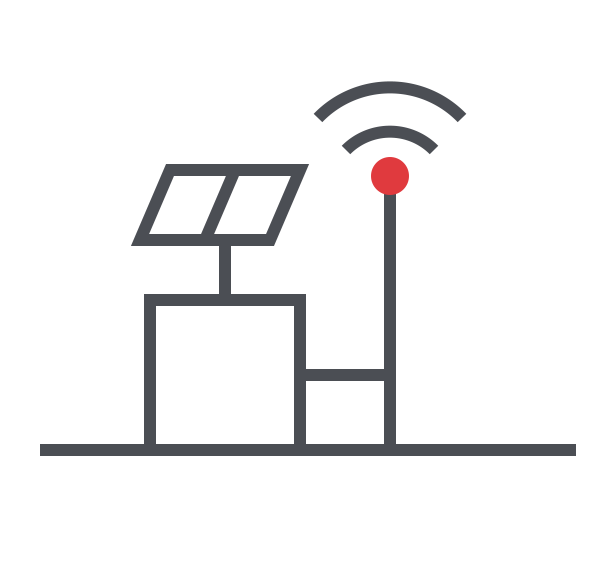
An RTU (Remote Terminal Unit) is a device installed at a remote site, for example a pumping station, a reservoir, a lift station or a solar plant. It collects measurements from sensors, operates outputs, and reports to the control center (a SCADA system) over cellular, radio or another communication path.
What matters in an RTU is its fit for sites with nobody on hand. It is usually suited to low power consumption, solar power and a battery, long-distance communication, and storing data during an outage and sending it when the link returns. That is why it is common in irrigation, water, energy and the monitoring of scattered infrastructure.
RTU versus PLC: a PLC is best suited to complex control logic on a machine or a process at one site, while an RTU is better suited to remote sites that need communication and a low-power answer. The line between them has blurred in recent years, and some models combine both abilities.
Choosing: check how many inputs and outputs are needed; which protocols the system speaks, for example Modbus or DNP3; how the site communicates (cellular, radio); how the site is powered and how long it must run on a battery; and whether data must be kept at the site when the link is lost.
To plan a remote monitoring system based on RTUs, including solar power, contact the Teleris engineering team. This article is general and for explanation only.